Book a Visit
Wedding Traditions

Brahmin Dress for Men.

The veshti, the angavastram and the panchakacham — what each one is, how it is draped, and which occasion calls for it.

The Tamil Brahmin wedding is one of the most visually specific of Indian wedding traditions. White and gold — the kasavu — is the dominant palette. The veshti (dhoti) in white silk with a gold zari border, matched with a white jubba or formal white kurta, and the angavastram draped over the shoulder: this is the traditional dress of the Tamil Brahmin groom and male family members. At The Black Lapel, we make the fine white and cream kurtas, jubbahs and formal shirts that complete the Tamil Brahmin wedding wardrobe alongside the traditionally sourced silk veshti.

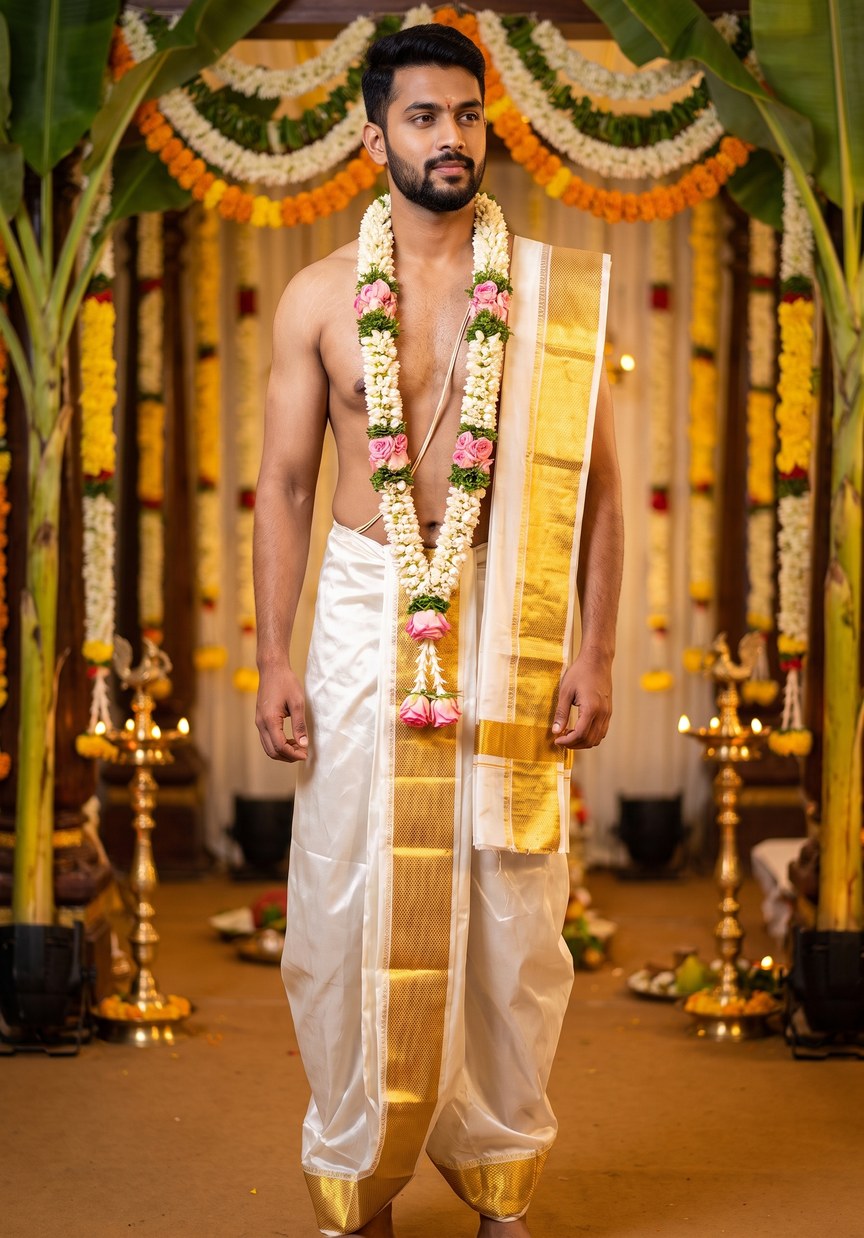
Tamil Brahmin groom in a white silk panchakacham with a broad gold zari border, bare-chested with the poonal sacred thread, a white angavastram over both shoulders and a jasmine and rose garland, standing in a flower-decorated wedding mandapam.

The traditional elements — veshti, angavastram and jubba

The Tamil Brahmin groom traditionally wears a silk veshti (a long white cotton or silk cloth tied at the waist) with a gold kasavu border. The veshti is paired with a white silk jubba — a formal shirt with a band collar that falls to the hip — or in some families a fine white kurta. The angavastram (a long silk stole) is draped over the shoulder and worn throughout the ceremony. The groom may also wear a distinctive seer-varisai jewellery set gifted by the bride's family at specific points in the ceremony.

The overall palette is almost entirely white and gold, with variations in the weight of the gold border, the sheen of the silk, and the specific style of the jubba or kurta. Within this restricted palette, quality of cloth and construction become the primary differentiators — a fine silk jubba in a lightweight, well-draped fabric is immediately distinguishable from a cheaper version in an inferior cloth.
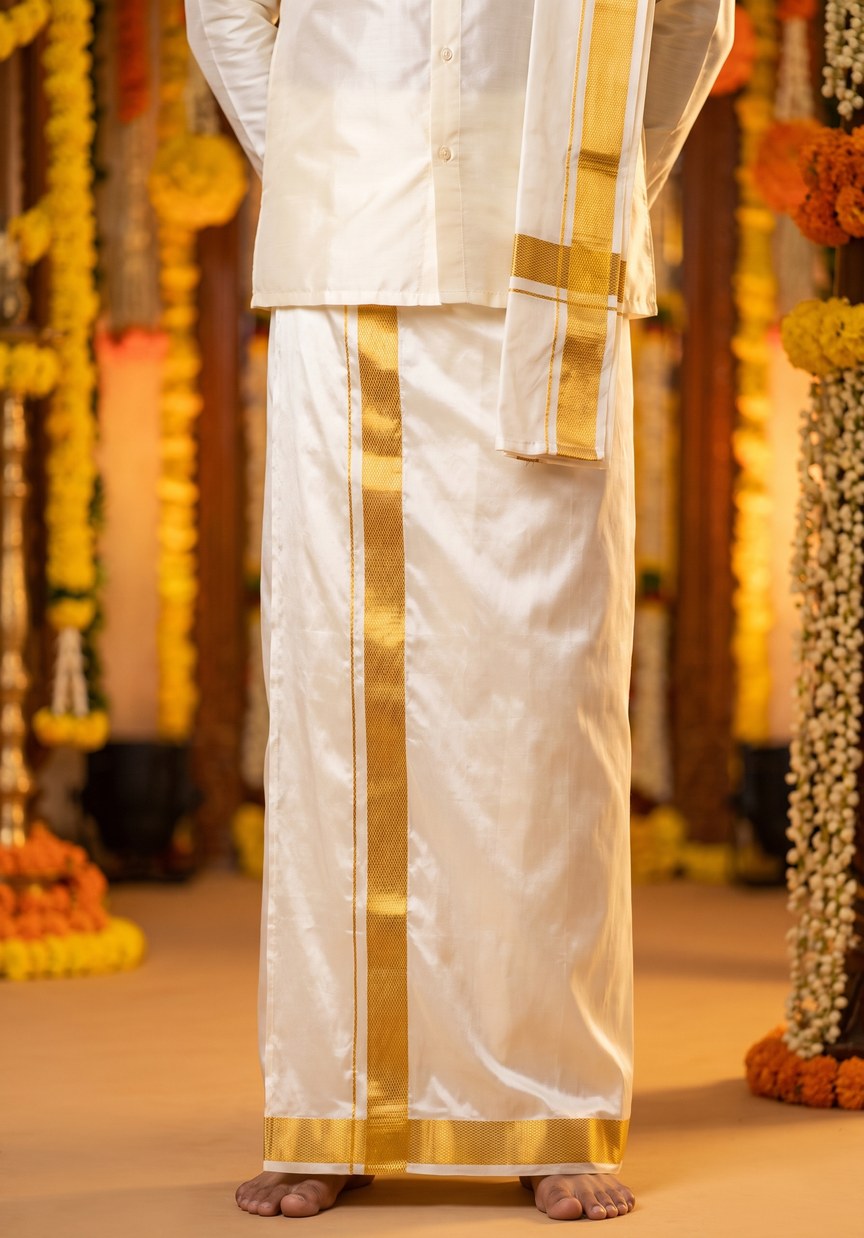
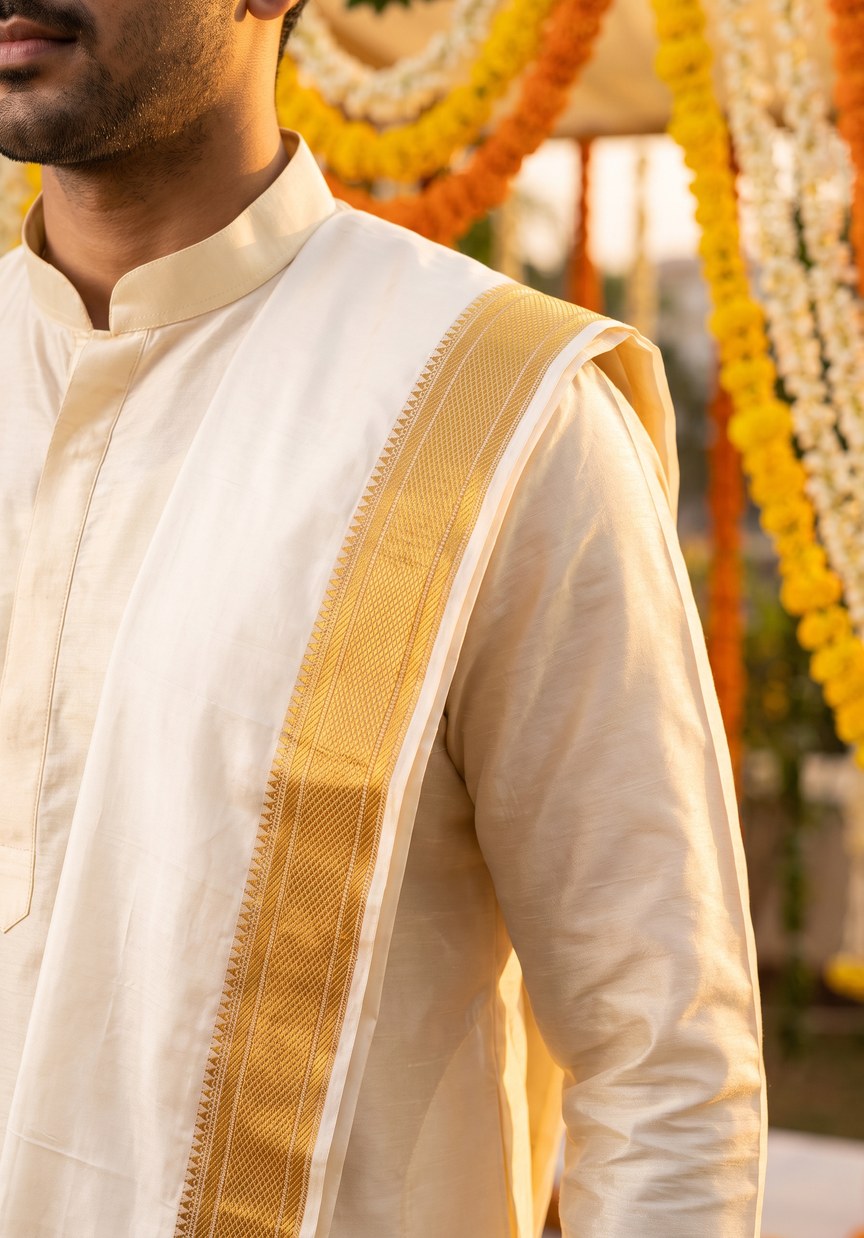
A wedding veshti in heavy white silk with a broad gold zari kasavu border running down the leading edge and along the hem, worn with an ivory silk jubba.
The veshti
An angavastram in white wedding silk with a broad gold zari border, laid flat over the left shoulder above an ivory silk band-collar jubba.
The angavastram
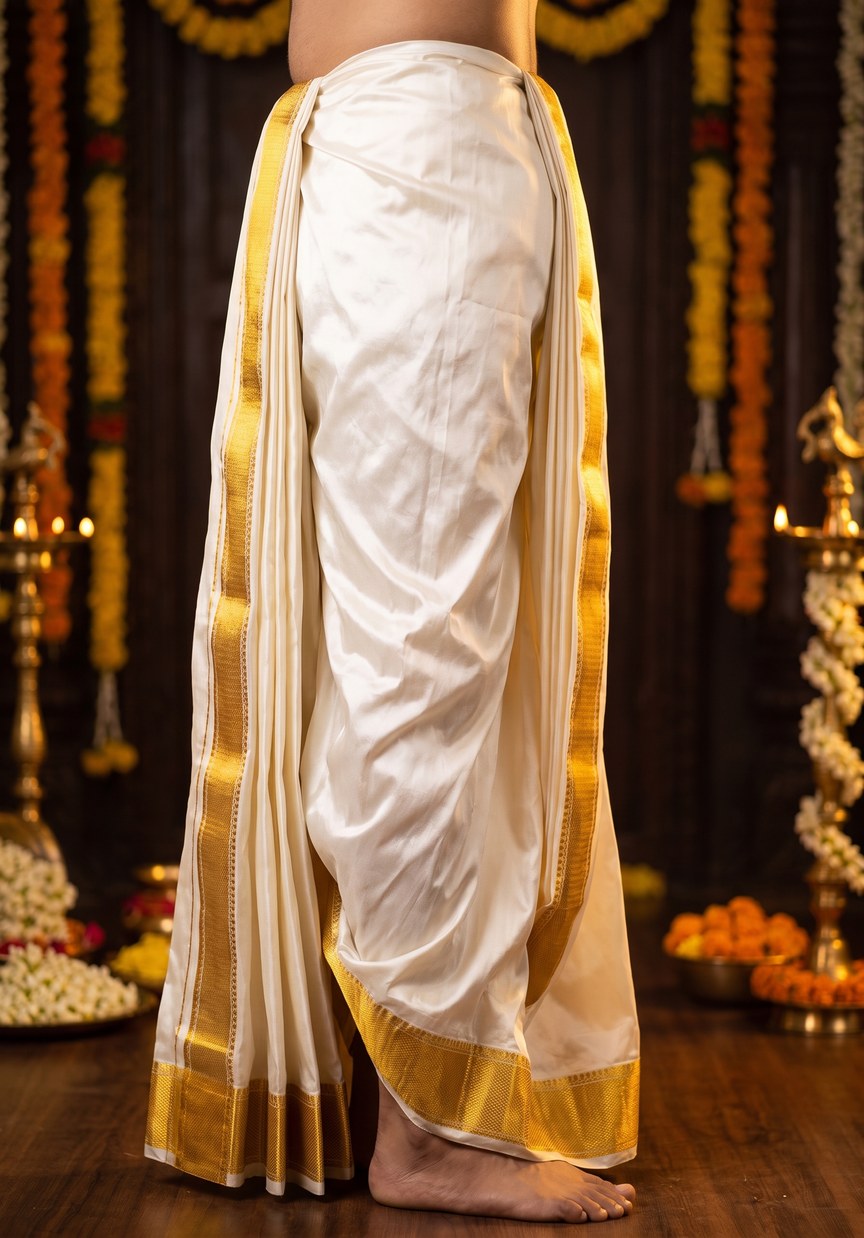
A panchakacham in heavy white silk with a broad gold zari border, pleated at the front and drawn between the legs in the traditional Tamil Brahmin drape.
The panchakacham
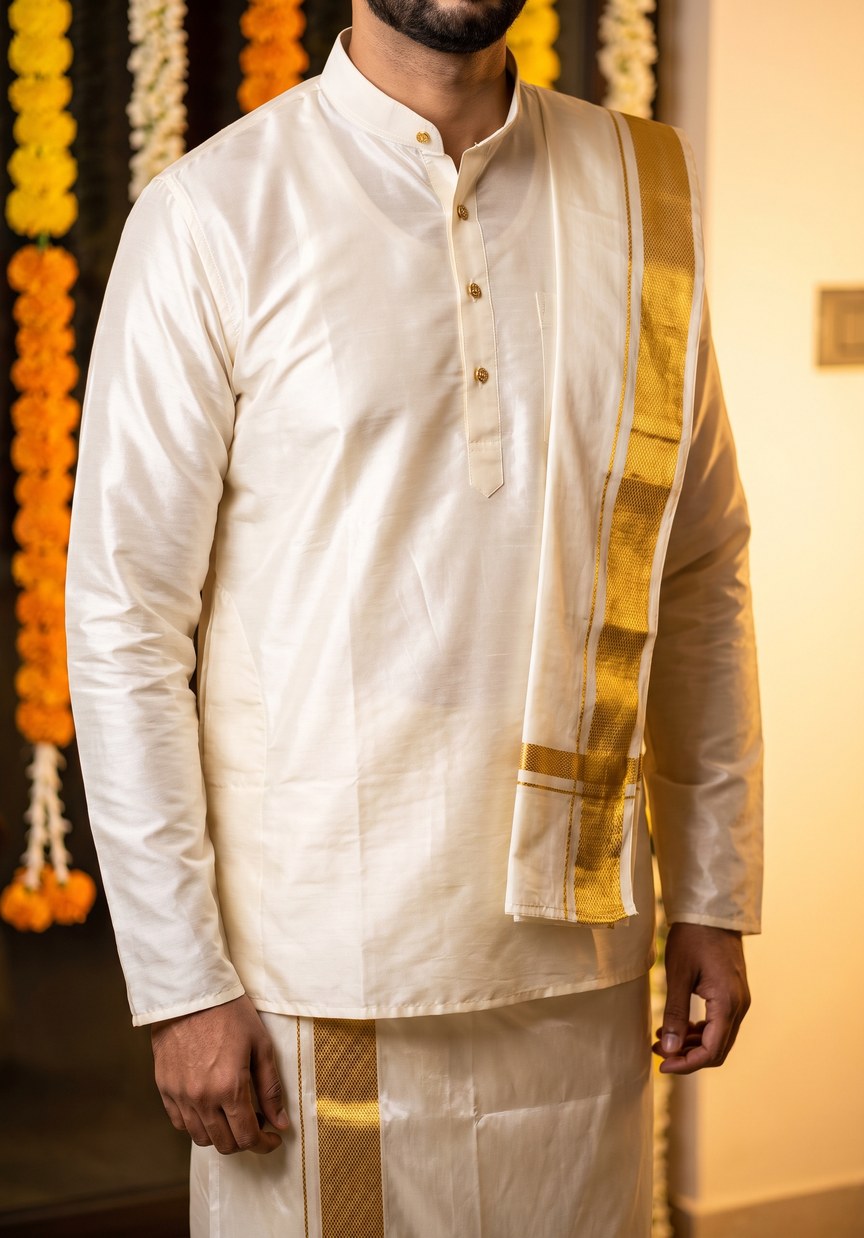
A formal jubba in ivory silk with a stand-up band collar and gold buttons, worn with a white angavastram and a gold-bordered veshti.
The jubba

Modern adaptations — reception and cocktail dress for Tamil Brahmin weddings

While the ceremony has strict traditional dress requirements, Tamil Brahmin wedding receptions — which typically take place the same evening or the following day — allow for a broader range of dress. The reception is often the occasion when the groom wears a fine suit, a Jodhpuri suit, or a more elaborate silk bandhgala that would be out of place in the ceremony context.

For guests at Tamil Brahmin weddings, particularly at the ceremony, adherence to the white-and-gold palette is a sign of respect for the tradition. A cream or off-white kurta with a gold border or subtle gold detailing, worn with a matching veshti or with formal trousers, is a universally appropriate guest choice for the ceremony. At the reception, standard Indian formal or Western formal is appropriate.
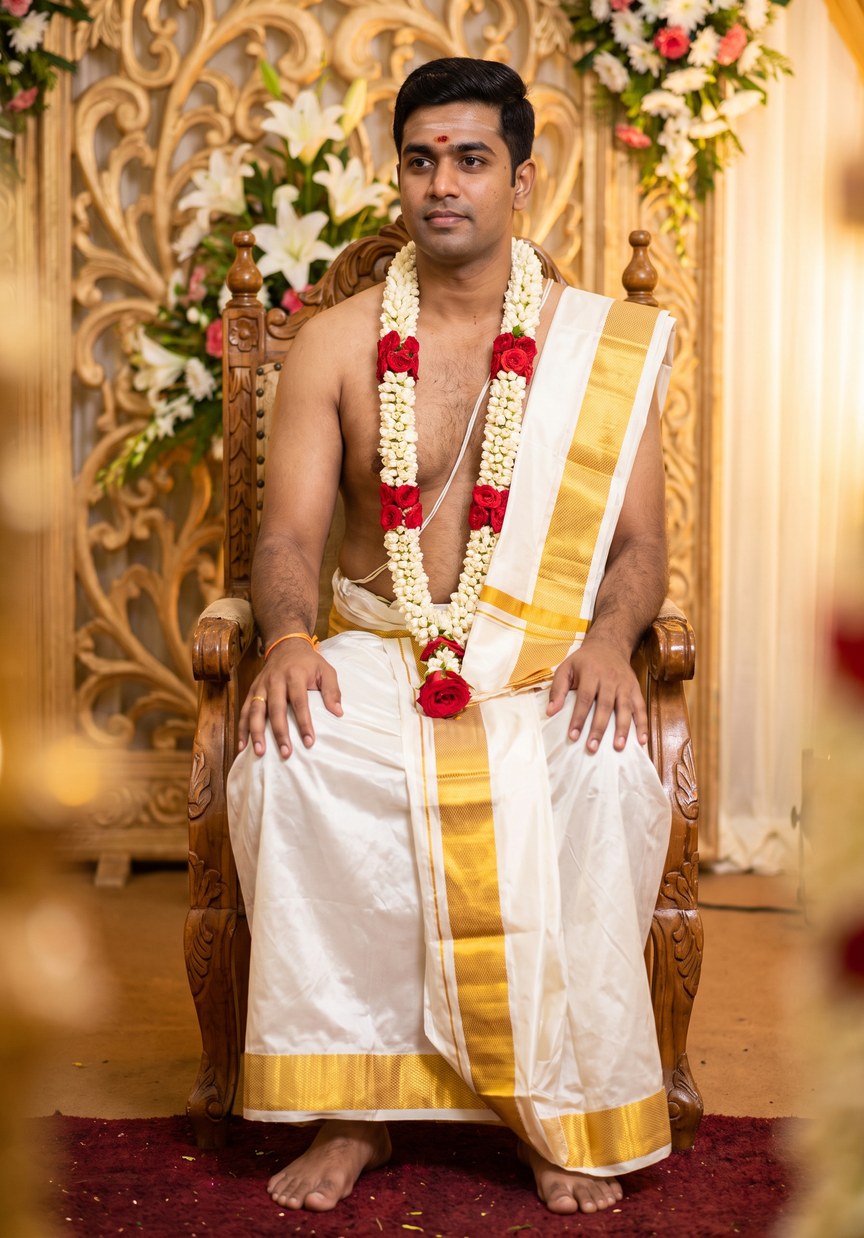
Seated portrait of a Tamil Brahmin groom in a white silk veshti with a broad gold zari border and a white angavastram, wearing a jasmine and red rose garland, in front of a carved gold wedding screen.

Commission your wedding outfit.

Bespoke wedding suits, sherwanis, bandhgalas and Jodhpuri suits — made at 4 Sardar Patel Road, Adyar, Chennai, since 1963. First consultation free.

Book a ConsultationWhatsApp Us