Longevity — the most important sustainability argument
The single most significant thing we do for the environment is make garments that last a long time. A well-made bespoke suit in a quality wool from a heritage mill, maintained correctly, lasts fifteen to twenty years. In that period, it displaces the four or five lesser suits a person might otherwise buy, wear down, and discard. The cumulative environmental cost of those four or five suits — the water, the energy, the transport, the synthetic fibres that do not biodegrade — is vastly greater than the cost of the one bespoke suit that replaced them.
This is not a claim that bespoke tailoring is "eco-friendly" in some marketing sense. It is a straightforward observation about the relationship between quality and longevity, and the environmental arithmetic that follows. Less, made better, is less waste. Always.
We make garments intended to be worn for decades. The construction methods we use — full canvas interlinings, hand-stitching at critical points, quality buttons and findings — are chosen for their durability, not for their cost efficiency. A garment built this way can be maintained, repaired, and altered as its wearer's body and circumstances change. It is designed to remain in use, not to be replaced.
Cloth sourcing — the origin of what we use
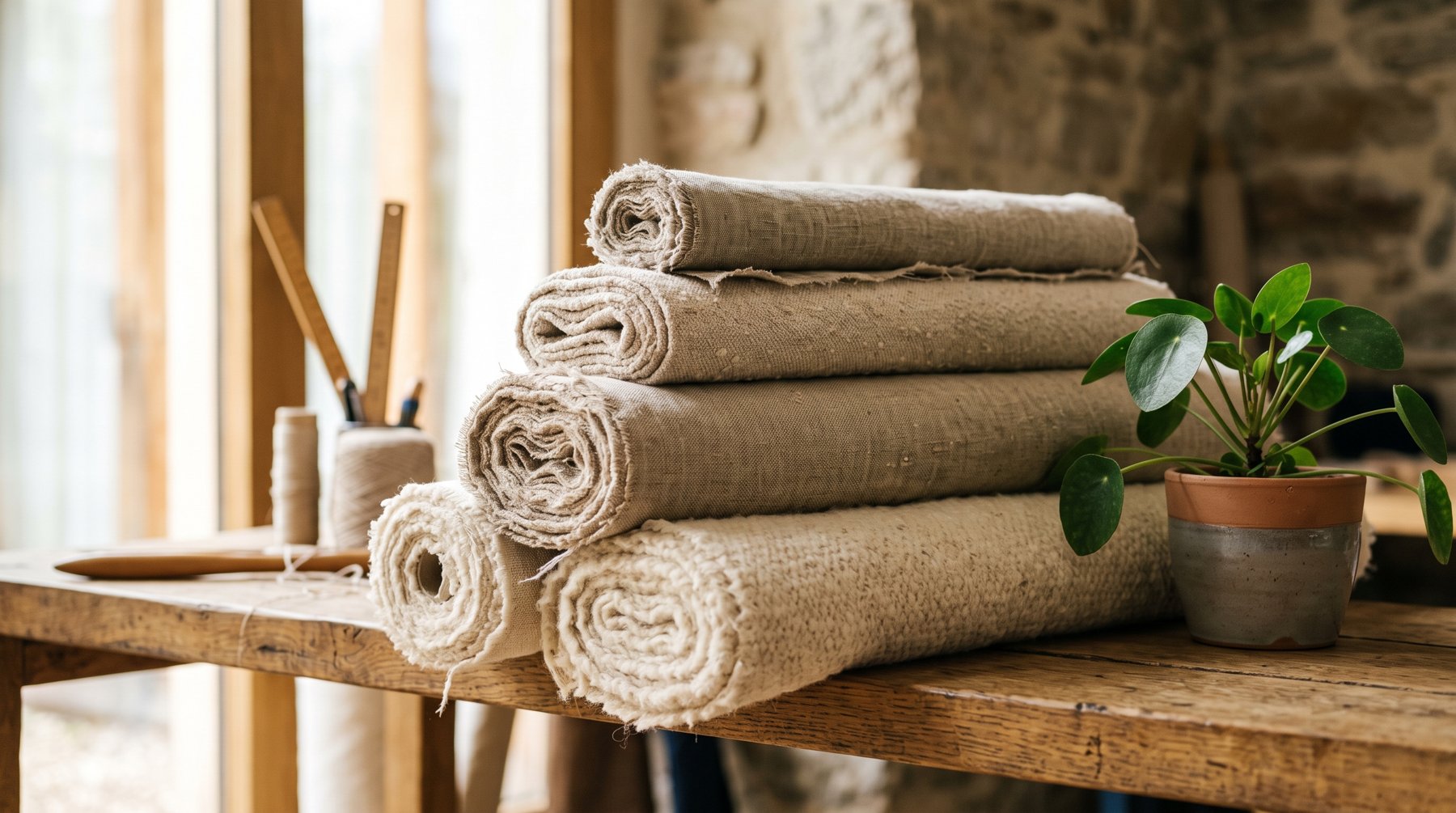
Most of our suiting cloth comes from British and Italian heritage mills — Holland & Sherry, Scabal, Dormeuil, Vitale Barberis Canonico — with generations of experience in quality wool production. These mills source merino wool primarily from Australia and New Zealand, process it in Britain and Italy, and produce cloth that is sold in small quantities to bespoke tailors worldwide. The supply chain is long, but it is a supply chain in which quality is the primary driver at every stage, which tends to correlate with more careful production practices than volume-first fast fashion.
We do not use synthetic suiting cloth. We do not use fused interlinings. We do not use the cheap imitation silk linings that degrade within a few years. These choices are made first for quality reasons, but they are also more sustainable: natural fibres biodegrade, quality cloth does not need replacing, and a garment built to last does not contribute to the cycle of disposal that synthetic fast fashion drives.
For Indian ethnic wear, we source silks from established Tamil Nadu and Varanasi weavers — small-scale production from craftspeople who have practiced their weave for generations. Supporting these craft traditions is, among other things, a sustainability argument: a viable traditional craft is a craft that does not need to be industrialised to survive.
Our workshop — scale and practice
We are a small atelier. We make a limited number of garments each week, cut by hand, fitted individually, constructed to a standard that takes time. This scale is not a strategic sustainability choice — it is simply the consequence of doing bespoke work correctly. You cannot rush a bespoke commission without compromising it, and the volume of work is therefore naturally limited by the hours available and the quality standard maintained.
Our cloth offcuts are used where possible for pocket bags, linings in parts of garments, and other internal uses. Significant offcuts from expensive cloths are kept for clients who order a matching item later. We do not generate vast quantities of waste in the way a production line does; each garment is cut from a length of cloth purchased specifically for that commission.
Repair and alteration — extending the life of what exists
We alter and repair our own garments as part of the ongoing client relationship. A client whose body has changed, whose suit needs re-lining, whose jacket has developed a worn elbow, brings the garment back to us. We repair or alter it, extending its life rather than recommending a replacement.
This approach — maintaining what exists rather than replacing it — is the oldest and most practical sustainability position available to a tailor. We have re-lined suits that are twenty years old. We have adjusted waistlines on jackets twice in a decade as a client's weight changed. The garment remains in use. That is the point.
An honest position
We will not claim that making a suit is carbon-neutral, or that our supply chain has zero environmental impact, or that the wool used in our cloth was produced without any effect on the land. These claims would not be true of any textile product, and making them in the service of a sustainability narrative is the kind of thing that gives sustainability communications a bad name.
What we will say is this: we make fewer garments than a production operation, we make them to last longer than the industry average, we use natural fibres from established sources, and we maintain what we make rather than encouraging disposal. If these things constitute a responsible approach to what we do, we are comfortable saying so. If they do not satisfy the sustainability requirements of a potential client, we understand — and we would rather be honest about what we are than perform a sustainability identity we have not earned.