The three things that determine price
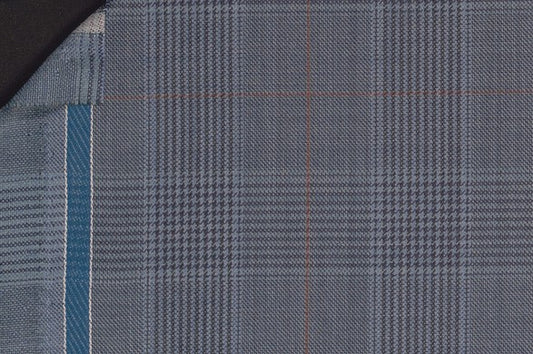
Cloth. The cloth is typically the largest single component of a bespoke garment's cost — and the most durable investment, because the cloth is permanent. The difference between a quality Indian mill wool and a fine Super 150s from Holland & Sherry or Scabal is significant in cost, and equally significant in drape, sheen, handle, and longevity. Both make a correct suit. The finer cloth makes a more distinguished one that wears better over a longer period.
Construction. A fully canvassed jacket, hand-padded lapels, hand-stitched buttonholes, a handmade collar — these represent hours of skilled craft that add measurably to the cost and equally measurably to the quality of the finished garment. A fused jacket (where an adhesive interlining bonds the cloth layers rather than floating canvas) is faster to make and costs less. It also looks different over time as the fusing begins to separate and the jacket loses the ability to mould to its wearer's body. We use full or half canvas as standard on all jackets; the construction cost is built into our pricing and is not optional.
Complexity. A plain two-button suit jacket is simpler to pattern and cut than a double-breasted jacket with peaked lapels and bespoke pockets. A shirt with a standard collar is simpler than one with a custom collar construction. Embroidered sherwanis involve embroidery costs from specialist craftsmen in addition to the tailoring cost. Complexity affects timeline and cost proportionally.
What the price includes
Every bespoke commission at The Black Lapel includes: the pattern drafting from your measurements, the basted shell fitting in the actual cloth, the full construction to our standard, and two fittings (occasionally three for complex garments or difficult fits). Alterations at your final fitting are included. Your pattern is kept on file at no charge for the duration of our relationship.
For repeat orders, the process is faster — your pattern exists and is refined rather than drafted from scratch — but the quality of construction and cloth selection is identical. There is no discount for the shorter process because the craft hours in the construction are unchanged.
We do not charge for the first consultation. We do not charge a cutting fee separate from the garment cost. The price we quote covers everything from first cut to final fitting.
The investment argument
Bespoke tailoring costs more than a department store suit. It does not cost more than a designer label suit of comparable quality — and it fits better than any suit made for an abstract body type rather than yours specifically.
The correct comparison is not bespoke against fast fashion or off-the-rack. It is bespoke against its true alternatives — the expensive ready-to-wear suit that still does not fit, the alterations bills that accumulate over time on clothes made for a different body, the replacement cost of garments that wear out in three or four years.
A bespoke suit made in good cloth and maintained correctly lasts a decade or more. A person who wears it three times a week finds the cost per wear, over its life, to be lower than the equivalent number of mediocre suits purchased in the same period. This is not a rationalisation — it is straightforward arithmetic applied to garment longevity.
We are also conscious that bespoke tailoring represents a significant purchase for most clients, and we discuss the options transparently at the consultation. If budget is a constraint, we advise on where to invest within the constraint — which cloth choice provides the best value, where a construction simplification does not significantly compromise the result. We would rather make a garment you are genuinely happy with at a price you can sustain than a more expensive garment that creates regret.
The range — a general guide
Without a specific cloth and commission in front of us, we can offer general guidance. For a two-piece suit in a quality Indian mill wool with our standard construction, the starting point is straightforward. For the same garment in a fine Super 120s or 150s from a British or Italian heritage mill, the cloth alone represents a meaningful step up, and the final cost reflects it. Three-piece suits, double-breasted jackets, and full formal morning coats are proportionally more complex and priced accordingly.
Shirts start from a figure that reflects the cloth and collar work. Trousers, when made as part of a suit, are priced within the suit commission. Made separately, they are priced individually. Indian ethnic wear — bandhgalas, sherwanis, kurtas — varies significantly based on cloth (a dupion silk sherwani in a plain is very different in cost from a fully embroidered Banarasi brocade sherwani) and embellishment.
The accurate number for your specific commission can only come from a conversation. We give you a clear quote before any work begins. There are no surprises after the fact.
Corporate and group pricing
For companies commissioning uniforms, executive wardrobes, or multiple garments for staff, we discuss corporate pricing separately. Group commissions — ten or more garments — are approached as a coordinated project with dedicated scheduling and pricing that reflects the volume and the nature of the commission. See our corporate tailoring page for more detail.