Söke, 1971 — a mill that starts in the field
Söktaş was founded in 1971 at Söke, a town on the Büyük Menderes plain in Aydın province, in the west of Turkey. The plain is old cotton country — alluvial soil, a long dry summer, and irrigation from the river that gives it its name.
What distinguishes the house is where its process begins. Söktaş is one of a very small number of shirting producers anywhere that works its own land rather than buying lint on the open market. The advantage is not romance, it is control: the mill selects the seed variety, sets the picking date, and keeps the crop traceable from field to finished piece. Anyone who has opened two bolts of supposedly identical cloth and found them a shade apart will understand why that matters.
The house also runs an operation in India, with a plant at Kolhapur in Maharashtra, which is how its cloth reaches the Indian trade in reasonable time rather than on a three-month shipping schedule.
The Giza quality — what the selvedge is telling you
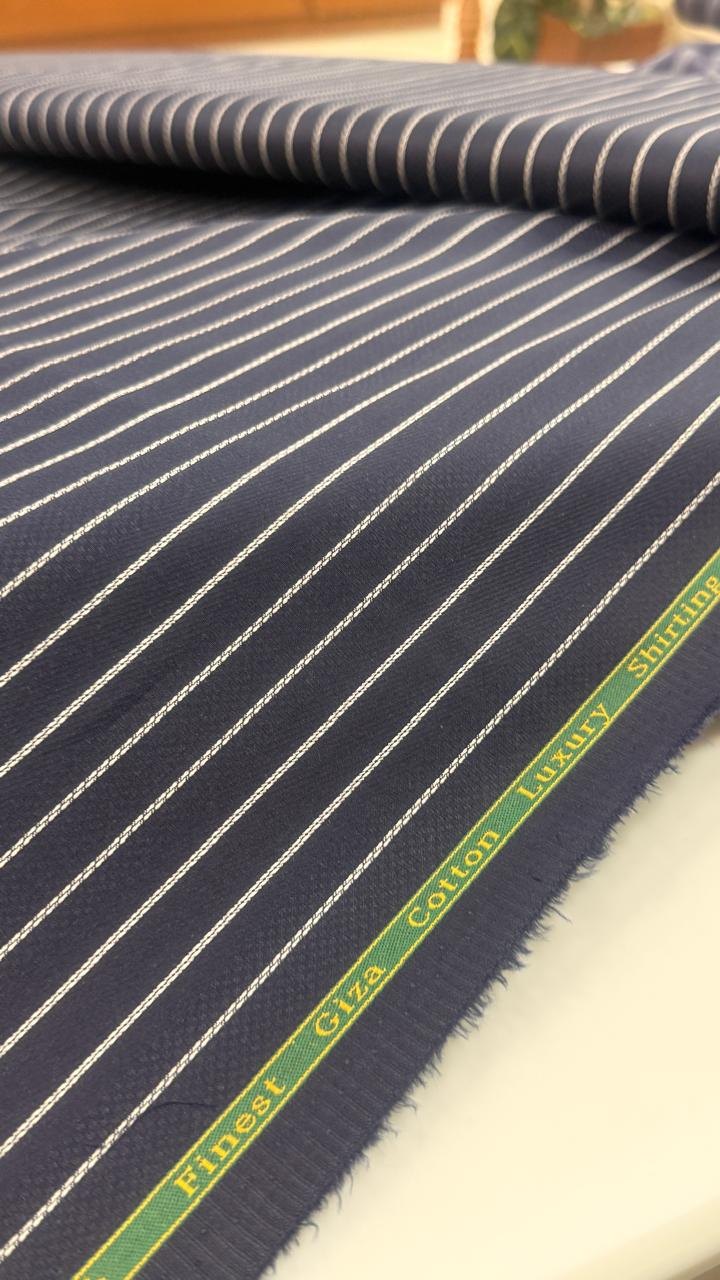
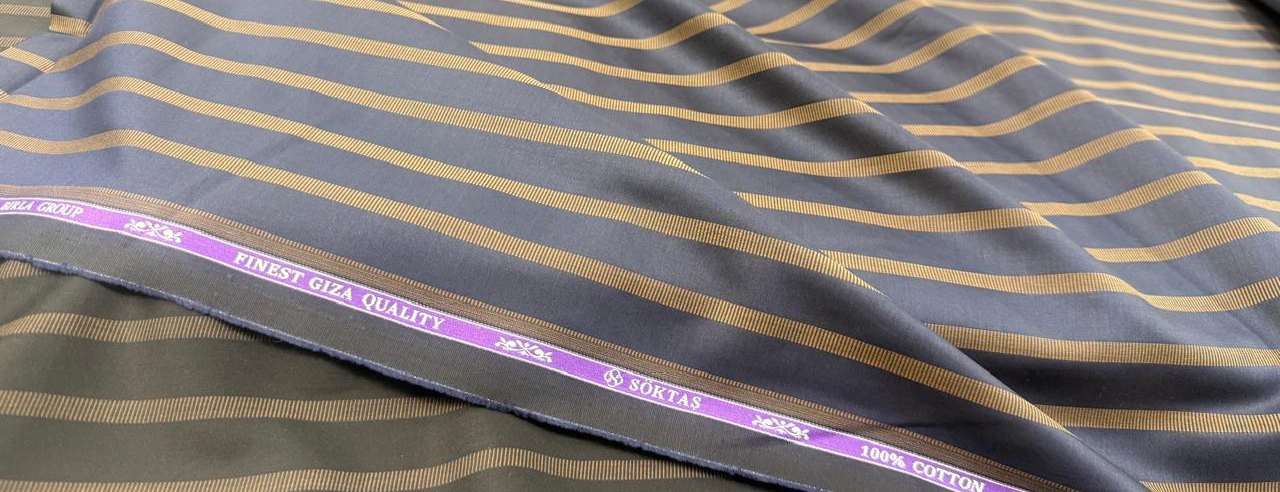
Run your eye down the edge of the cloth and you will find the mill writing its own specification into the selvedge: Giza quality, and the house name beside it. That is not decoration. It is the mill declaring which cotton went into the yarn, and it is the single most useful line of text on a bolt of shirting.
Giza is Egyptian extra-long-staple cotton, grown in the Nile Delta. The premium grades — Giza 45, 87, 88, 92, 93 and 96 — are the ones that reach fine shirting, and Giza 45 and 87 are the most prized of them. A Giza 45 fibre runs to around 36 millimetres with a uniformity index near ninety per cent, which in plain terms means the fibres are both long and consistently long.
That buys three things in a shirt. A longer fibre spins into a finer yarn at the same strength, so the cloth can be light without being flimsy. Fewer fibre ends protrude from the yarn, so the surface is smoother against the skin and pills far less at the collar and cuff. And the smoother surface takes light evenly, which is where the quiet lustre of a good cotton shirt comes from — nothing has been added to produce it.
The striped cloth we keep
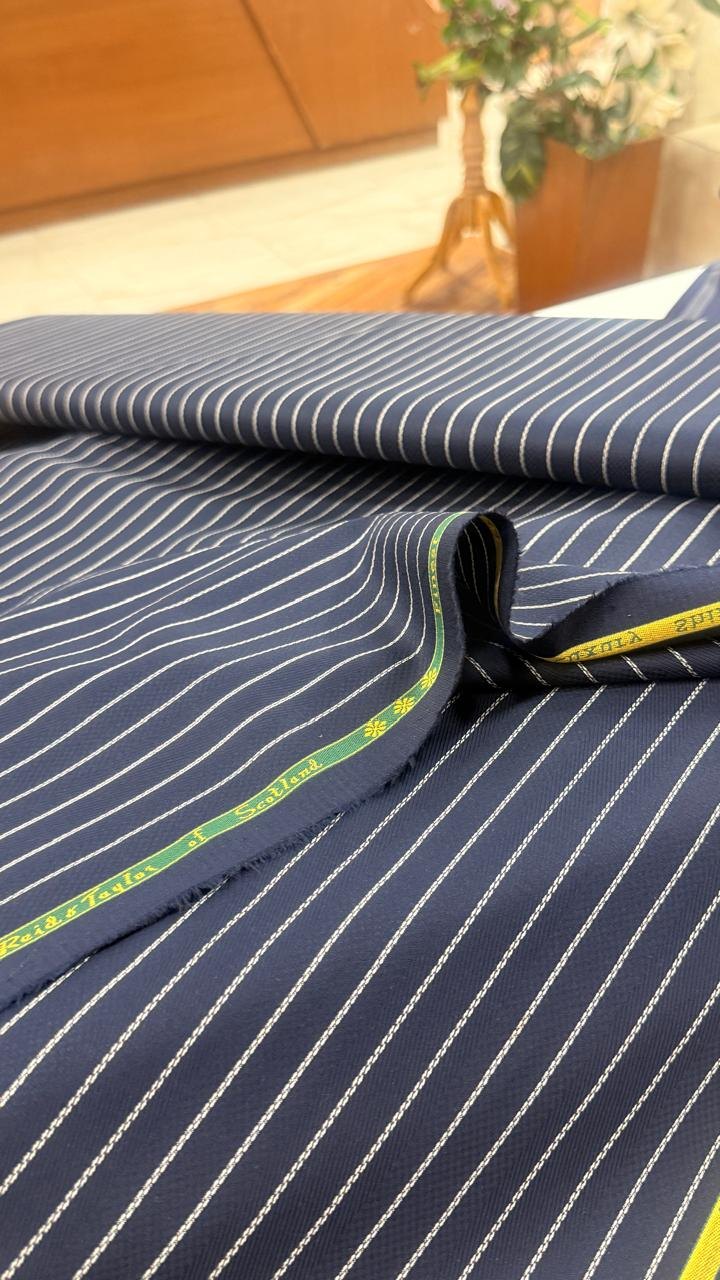
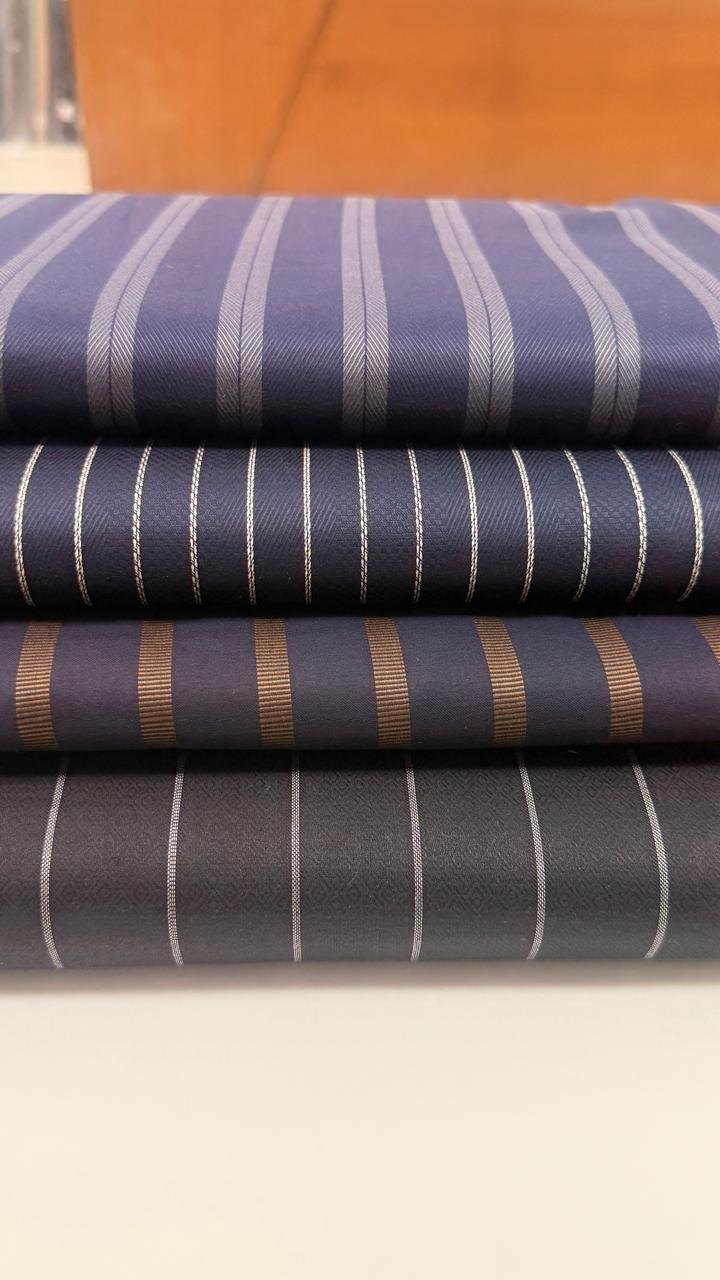
The Söktaş pieces on our shelf are navy grounds with the stripe woven in rather than printed on — fine white cords set at a regular interval on some, a wider tan and gold bar on others. A woven stripe cannot wash out or wear off, because it is structure rather than surface, and on a dark ground that is the difference between a shirt that looks the same in year five and one that has gone quietly grey.
These are formal cloths. The navy ground is dark enough to carry a tie and a dark jacket without the shirt competing, and the stripe is fine enough to read as texture from across a room rather than as pattern. For a man who wants something other than plain white or plain blue under a business suit, and does not want to shout about it, this is the useful middle ground.
The Söktaş shirt at The Black Lapel
We cut Söktaş Giza quality cloth for business shirting, and it is the first book we open for a customer who asks for a striped shirt with some substance to it. It sits a step below the Swiss and British fine-count cloths in weight and a long way above anything sold as merely a cotton shirt.
In Chennai the practical argument is as strong as the aesthetic one. A smooth long-staple cotton moves against the skin rather than clinging to it, and it comes out of a wash looking like itself. We would not put it in the same sentence as our lightest voiles for an April afternoon, but for an air-conditioned office worn under a jacket, five days a week, it is as sensible a cloth as we stock.
Come in and handle a piece against a plain poplin. The difference in surface is obvious in about ten seconds, and it is the clearest demonstration we can give of what staple length actually buys you. First consultation is free.